
Material, Finish, and Context QA
A product render can make a finish direction easy to discuss while leaving the physical material unresolved. The review question is not whether the image looks realistic. It is whether the image communicates a deliberate visual decision without implying evidence that has not been established.
This material render checklist organizes the work around six recurring questions: what finish direction the image communicates, which reference supports it, whether texture and edges hold at a believable scale, whether the reading survives changed views, whether context clarifies proportion and use, and which open questions belong with specification, CAD, engineering, measurement, testing, or source confirmation.
The output is a review record, not a declaration of verified physical behavior.

Start With Finish Intent
The sketch usually commits to form, massing, proportion, and major transitions. The render adds color, highlight behavior, texture, reflection, and context. Those additions help reviewers compare directions, but they also introduce assumptions that may not exist in the design record.
Record the intended finish direction before judging the image. Include:
- Material family or visual category
- Target color or named color reference
- Sheen or highlight character
- Roughness or surface-response direction
- Texture scale and pattern
- Edge break and transition treatment
- Controlled variation or weathering
- Allowed visual defects or imperfections
- Intended viewing conditions
- Unresolved physical questions
“Matte black housing” is a starting label, not a complete finish description. It leaves open the highlight width, surface variation, edge behavior, texture frequency, and whether the visual direction suggests coated metal, molded polymer, painted metal, or another construction.
“Premium finish” is also incomplete until it becomes visible criteria. Define whether reviewers should inspect a narrow or broad highlight, consistent or varied roughness, controlled reflection, subdued texture, restrained edge response, or another observable direction.
The render depicts finish intent. It does not establish tested material behavior.
Anchor the Color and Roughness Reference
Color judgments drift when the only reference is a screenshot, an uncontrolled photograph, or a verbal description. Compare the render against a named reference when one exists, and record the conditions surrounding that comparison.
- Reference image or physical sample identifier
- Color description or target value
- Surface condition shown by the reference
- Lighting and viewing angle
- Display and color-management assumptions
- Acceptable visual variation
- Whether the reference is illustrative or project-defining
A render may show the intended color direction under one environment while shifting under another. Appearance references describe responses that depend on illumination, viewing direction, surface characteristics, and geometry. Standardized appearance work also separates visual observation from a defined method, geometry, and measurement context.
The practical QA question is narrower: does the render communicate the intended color direction under the stated presentation condition? A stronger conclusion about color difference, gloss, haze, or surface properties requires a specified method and suitable measurement context.
Translate Reactions Into Image Criteria
Review language often arrives as “fake,” “plastic,” “too shiny,” “tacky,” or “flat.” Keep those reactions as useful signals, then convert them into inspectable observations.
| Reader reaction | Inspectable image cues | Next review question |
|---|---|---|
| “It looks plastic” | Broad uniform highlights, weak microvariation, abrupt edge behavior, or context-free lighting | Does the surface response match the intended finish direction? |
| “It is too shiny” | Highlight width, intensity, continuity, reflection content, and viewing angle | Is the finish too reflective, or is the environment producing an oversized reflection? |
| “The texture is too large” | Pattern frequency compared with product scale and nearby features | What physical scale does the reference require? |
| “It feels flat” | Limited tonal separation, weak edge breaks, low reflection variation, or weak form contrast | Is the issue material response, lighting, geometry, or camera position? |
| “It looks tacky” | Excessive contrast, uncontrolled weathering, crowded texture, or decorative variation | Which detail was intended, and which detail did the render introduce? |
| “There is no sense of scale” | No hand, surface, adjacent object, mounting condition, or use setting | Which scale cue should the presentation add? |
These translations support reader interpretation. They are not prevalence findings, material diagnoses, or proof of a physical defect.
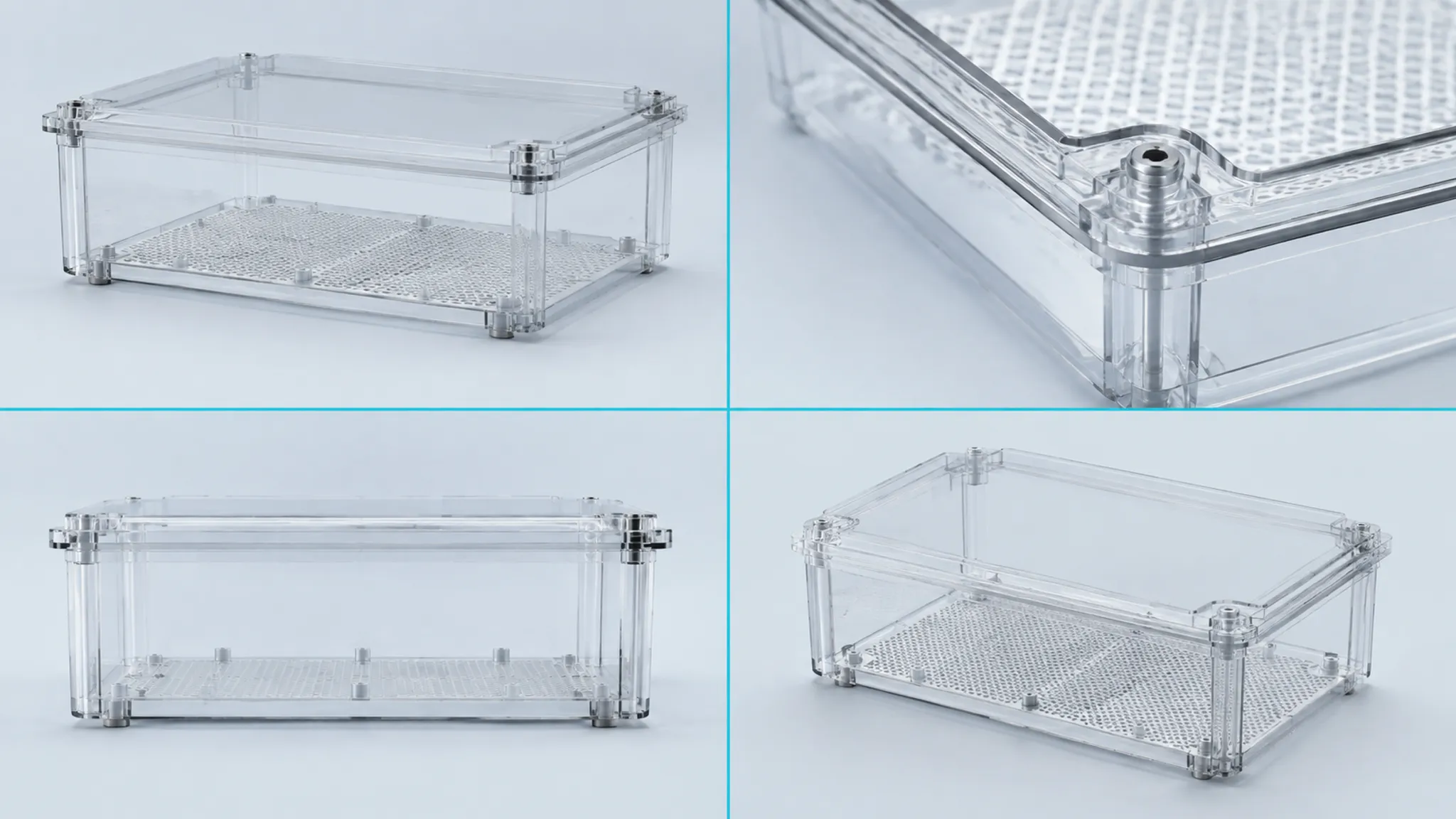
Inspect Texture and Edge Scale Separately
Texture detail can make a render appear more specific while weakening the product direction. Inspect the relationship between texture frequency, product dimensions, edge breaks, and nearby features.
Use at least three evidence views:
- Full product view: overall material reading and visual hierarchy
- Close-up view: texture frequency, microvariation, seams, and edge behavior
- Context view: scale, placement, and surrounding materials
A pattern that looks restrained in a close-up may dominate the full product view. A small surface feature may disappear at presentation size and leave the finish looking uniform.
A roughness map is a renderer input or authored control within a stated material model. It is not automatically a measured surface-roughness value. The same map value can produce different visual results across material models, renderer implementations, lighting conditions, and color-management settings.
Record the material model and renderer context when values move forward. PBR terminology describes how an image may be constructed; it does not prove that the shader came from measured data or predicts a manufactured sample.
Check Edge Transitions
Edges concentrate several interpretations at once. They reveal proportion, highlight spread, radius, chamfer, surface continuity, and the relationship between adjacent finishes.
- Do highlights travel continuously across the edge?
- Is the edge break visible at the intended viewing distance?
- Do adjacent surfaces appear to meet cleanly?
- Does the highlight imply a radius absent from the sketch or CAD?
- Does a dark seam represent geometry, occlusion, a material boundary, or lighting?
- Does texture change unnaturally near the edge?
The render introduces these cues even when the sketch does not specify them. When edge response materially affects the product reading, record it as a design assumption rather than treating the geometry as resolved.
A beauty view can hide that ambiguity. A neutral-light close-up or alternate-angle study usually exposes it more clearly.
Compare Views Before Revising the Surface
One polished image cannot carry every finish decision. Camera position, light size, environment reflections, exposure, and post-processing can support one interpretation while suppressing another.
- Beauty view: intended presentation image and primary visual hierarchy
- Neutral-light view: restrained lighting for inspecting surface response
- Close-up view: texture scale, edge transitions, seams, and local variation
- Alternate-angle view: highlight position, reflection spread, and directional change
- Use-context view: proportion, contact surfaces, surrounding scale, and visual function
These views do not need to look identical. Each has a different review job.
Vary Camera and Lighting One Variable at a Time
Change camera position, light direction, light size, environment reflection, and exposure separately where possible. Preserve the product state so the cause of a changed reading remains traceable.
- A finish may read as matte only because the light produces no strong reflection.
- A highlight may become a false geometry cue.
- An environment reflection may dominate the silhouette.
- Texture may appear larger or smaller because of camera distance.
- Color may change with viewing direction.
- A dark region may come from lighting rather than the surface.
- Post-processing may add contrast that was not part of the finish intent.
Directional reflectance cannot be understood from a single undifferentiated image. Multiple views can expose uncertainty, but they do not turn a concept render into an appearance measurement.
For angle-dependent or effect-like finishes, one view may suppress important variation. Treat the image as a presentation direction unless measured references and a defined acquisition or comparison method support a stronger conclusion.

Add a Scale and Use-Context Cue
A product can appear proportioned in isolation while remaining difficult to judge in use. Context does not need to become a marketing scene. It needs to answer a specific review question.
- Hand or body reference for approximate handling scale
- Desk, wall, vehicle, appliance, or equipment context for placement
- Mounting surface for contact and orientation
- Nearby control or interface for reach and proportion
- Packaging or presentation board for comparing variants
- Interior or exterior setting for reflection and ambient-light context
Label the context as illustrative when it is not based on a documented installation or measured environment. It can clarify scale and viewing conditions without establishing ergonomics, control reach, structural support, or final use performance.
Use-context imagery also tests finish hierarchy. A surface that reads as restrained in a studio view may become visually dominant beside nearby materials. An attractive reflection may obscure a control, seam, or interface in the intended setting.
Separate Visual Questions From Material Questions
Material QA becomes unreliable when visual observations and physical questions share one status label. Keep them in separate columns in the review record.
Visual Questions
- Does the color direction match the named reference?
- Is the highlight character consistent with the intended sheen?
- Is the reflection pattern controlled across the main views?
- Does texture remain at the intended scale?
- Are edge transitions readable and consistent?
- Does controlled variation support the direction?
- Does the finish remain legible in use context?
- Which cues come from lighting or post-processing rather than the surface?
Physical and Specification Questions
- What exact material, coating, or finish system is intended?
- Which color, gloss, haze, or appearance method applies?
- What variation and defect limits should be recorded?
- Does a physical sample need comparison?
- Does the question require supplier documentation?
- Does it belong with engineering review, laboratory measurement, or physical testing?
- Is the material identity confirmed?
- Are dimensions, interfaces, durability, chemical response, safety, or compliance unresolved?
ASTM and NIST resources help explain why appearance claims depend on defined characteristics, observation geometry, calibration, surface topography, reflectance, and uncertainty. They do not validate this concept image or select a standard for the product without checking the current document scope and project requirements.
Keep the Handoff Record Reproducible
A finish direction is difficult to review later when the image is separated from its inputs. Carry this record with the render set:
- Render identifier and revision
- Product geometry or source-study identifier
- Material family and finish intent
- Color and roughness references
- Texture source and scale assumption
- Edge treatment assumption
- Camera position and lens or field-of-view information
- Light direction, light size, and environment reference
- Exposure, tone mapping, and post-processing notes
- Renderer, material model, color-management setup, and relevant version
- Units where they affect scale or texture interpretation
- Context assumptions
- Open questions and their destination
- Source references and rights-review status for external assets
The purpose is not to turn the render into a technical specification. It is to make the visual decision traceable.
Parameter names and values may not transfer identically between rendering systems. A roughness value, reflection control, or other material parameter needs its model context before another person can interpret or recreate it.
Worked Review: A Dark Handheld Enclosure
Illustrative scenario: A concept render shows a compact handheld enclosure in a dark, low-sheen finish. The beauty view looks polished, but reviewers describe it as “too shiny” and say the surface texture feels oversized.
The first observation is not that the physical finish is wrong. The image shows a continuous bright reflection across the enclosure, limited local variation, and a texture pattern that remains visible at full-product scale.
The next comparison uses a neutral-light view, a close-up, and an alternate angle. If the reflection narrows under a different light size, the reaction may relate partly to the lighting environment. If the texture remains oversized across views, its scale assumption needs revision or confirmation.
The handoff record separates the next decisions:
- Revise in the render: reflection content, texture frequency, or post-processing
- Confirm in the design record: edge break, surface variation, and intended sheen
- Route for specification: finish family, color reference, defect limits, and allowed variation
- Route for measurement or testing: physical appearance comparison, durability, tactile response, or other performance questions
The render communicates a direction. The review record identifies what still needs evidence.
Material Render Checklist
- Intended material family is named without treating appearance as material identification.
- Finish direction describes color, sheen, texture scale, edge treatment, and allowed variation.
- Color reference is recorded with relevant viewing or display conditions.
- Roughness terminology is tied to the stated material model.
- Texture scale is checked in full-product and close-up views.
- Edge transitions are inspected for geometry, highlight, seam, and proportion cues.
- Beauty, neutral-light, alternate-angle, and context views are compared.
- Reflection uniformity is checked across camera and lighting variations.
- Scale and use-context cues are labeled as documented or illustrative.
- Subjective reactions are translated into observable image criteria.
- Camera, lighting, exposure, environment, post-processing, and renderer context are recorded.
- Visual decisions are separated from material and performance questions.
- Open questions are routed to specification, CAD, engineering review, measurement, testing, supplier documentation, or rights review.
- The image is labeled as a concept preview when physical validation has not occurred.
What This QA Pass Leaves Open
A convincing product render cannot establish dimensions, mechanisms, ergonomics, material performance, manufacturing feasibility, durability, chemical resistance, tactile suitability, safety, standards compliance, market acceptance, material identity, or permission to reuse external assets.
Photorealism is an image property. It does not replace a documented specification, calibrated measurement, engineering review, physical sample, laboratory method, physical test, or rights review.
The useful stopping point is clear: the team should be able to state which finish direction the render communicates, which interpretation changes across views, and which questions must move forward. Shader implementation belongs in the relevant rendering workflow. Physical response belongs with the applicable specification, measurement, engineering, supplier, laboratory, testing, or rights-review process.
Sources
- Paint Standards and Related Coating Standards for bounded terminology around coating appearance and finish specifications.
- Form and Style for ASTM Standards for the role of defined scope and method language in standards documents.
- Surface and Interface Metrology Group for surface measurement, calibration, and uncertainty boundaries.
- Spectrophotometry for the distinction between color observation and instrument-based measurement conditions.
- Techniques for BRDF evaluation for directional reflectance and the limits of interpreting a surface from one image.
- Acquisition and Validation of Spectral Ground Truth Data for Predictive Rendering of Rough Surfaces for the distinction between plausible rendering and validation against measured reference data.
- Mastering Architectural Rendering Techniques: A Professional Guide for bounded renderer-domain terminology around camera, lighting, materials, and presentation.