
Unresolved Assumption Reviews
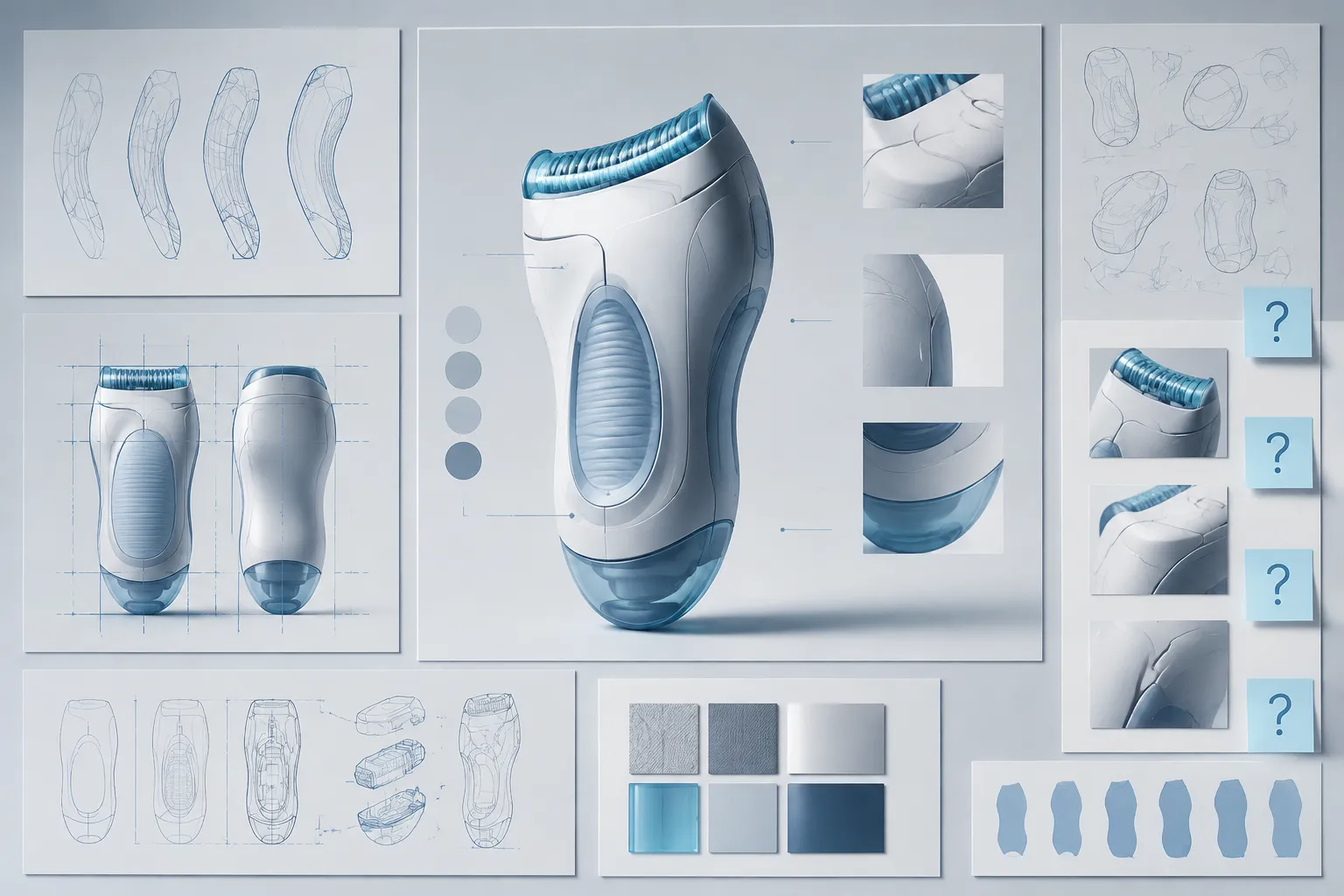
A concept render can make an unresolved decision look settled. The silhouette may appear intentional, the material may look specified, and a control may seem reachable. Yet the image may communicate only a direction.
A useful concept render review separates three layers:
- What the image visibly shows.
- What the reviewer infers from those cues.
- What still needs comparison, documentation, or testing.
An assumption register keeps these layers together. It records the design assumptions carried by a concept, the consequence if one changes, and the next review needed before the decision moves forward. A render remains presentation evidence, not dimensional, mechanical, material, manufacturing, safety, compliance, market, or reuse evidence.
More specific pages
These pages continue the topic in smaller, more specific directions.
What Design Assumptions Mean in a Concept Review
An assumption is a working belief used to continue design activity while information remains incomplete. In a render, it may concern the apparent thickness of a housing, the relationship between two surfaces, the intended grip area, the finish of a panel, or the space around a control.
The image introduces an interpretation, but it may not show which parts were decided and which were filled in for presentation. Early design research describes assumptions as a way to continue working across knowledge gaps. Their confidence can change when new information arrives.
For visual reviewers, the practical question is not whether assumptions exist. The question is whether the team can see them, compare them, and route them to the right next check.
Build an Assumption Register From a Concept Render
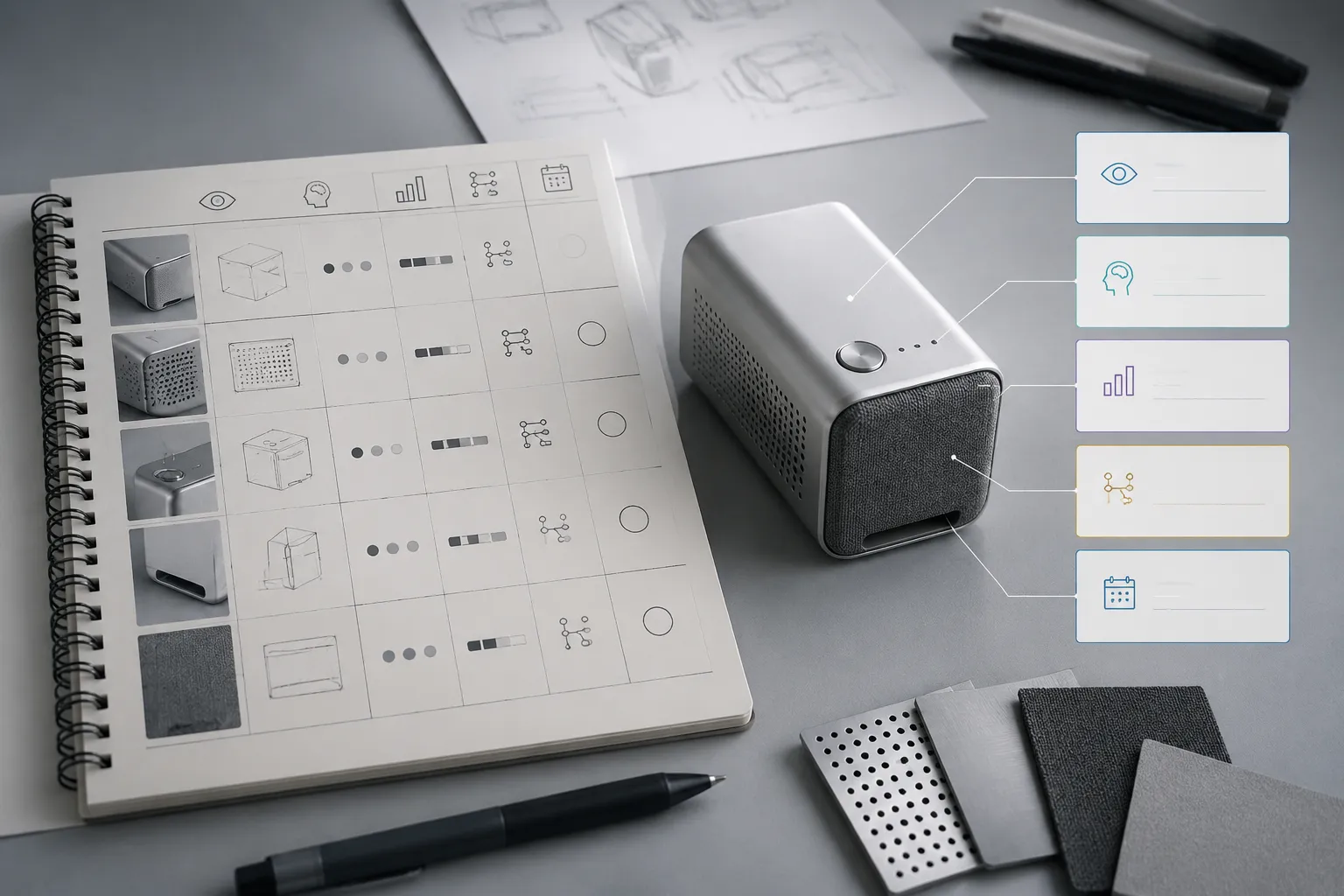
Start with a visible feature rather than an abstract concern. For each item, record the cue in the image, the interpretation it invites, and the question that could confirm or revise it.
| Register field | What to record |
|---|---|
| Visible cue | The feature that can be pointed to in the sketch or render. |
| Inferred decision | What the feature appears to communicate. |
| Assumption | What the current concept presumes while information is incomplete. |
| Confidence | How strongly the available information supports that presumption. |
| Consequence if wrong | Which visual direction, requirement, or handoff decision may change. |
| Comparison or reference | The alternate view, reference, mockup, or source record needed. |
| Next review | The stage or workstream that should address the open question. |
| Status | Open, compared, documented, routed, confirmed by record, or reopened. |
This is a traceability workflow, not a universal industry standard. Its value is practical: another reviewer can understand what was seen, what was inferred, and why the item remains open.
Illustrative Example: A Compact Device Housing
Consider a hypothetical render showing a shallow rectangular housing with a dark front panel and a recessed control. The visible observation is specific: the control sits within a narrow horizontal transition near the upper edge.
The inferred decision may be that the control should remain visually separated from the main face. The unresolved assumption is that the recess provides enough space for the intended interaction. The render cannot establish reach, clearance, tactile behavior, or mechanical construction.
- Visible cue: Recessed control near the upper front transition.
- Inferred decision: The control is visually separated from the main face.
- Unresolved assumption: The recess and edge break support the intended use context.
- Consequence if wrong: The control position, front-panel proportion, or transition may need revision.
- Next check: Compare another viewing angle and route the interaction question to the relevant technical review.
Separate Visible Observations From Inferred Decisions
Describe the image before interpreting it. A visible observation should be testable by pointing to a region, view, or reference. An inferred decision explains what the feature seems to mean. The assumption records what still depends on incomplete information.
For a tall appliance study with a narrow vertical opening:
- Visible observation: The opening extends through most of the front elevation.
- Inferred decision: The direction prioritizes a strong vertical division and a continuous front cue.
- Unresolved assumption: The opening can remain visually continuous across the intended use context and adjacent components.
- Review consequence: A side view, scale cue, or alternate material treatment may change the perceived proportion.
This sequence prevents a common error. “The product has a continuous opening” sounds factual, even when the render shows only a continuous graphic treatment.
Use evidence-sensitive language: “The sketch shows,” “the render introduces,” “the image suggests,” “the comparison raises a question,” and “the reference documents.” When a claim depends on information outside the image, record that dependency instead of presenting the inference as settled.
Keep Requirements, Constraints, Risks, and Results Separate
Requirement Versus Assumption
A requirement states what the design needs to achieve or satisfy. An assumption states what the current concept presumes while information is incomplete. A render may suggest a requirement without establishing one.
A broad base may communicate a desire for a grounded, compact object. It does not establish a dimensional condition or show that the concept meets one. Keep the documented requirement, the visual intention, and the current assumption in separate fields.
| Item | Example |
|---|---|
| Visible cue | Broad lower mass and short upper body. |
| Inferred intention | The direction should read as grounded and compact. |
| Requirement | A documented project condition concerning intended use. |
| Assumption | The selected massing supports the intended visual and spatial direction. |
| Evidence needed | The applicable requirement record, dimensions, or later review. |
When a reviewer writes “the design must have this proportion,” ask whether the statement comes from a project record or from visual preference. Both can influence a decision, but they belong in different fields.
Constraint Versus Assumption
A constraint limits the available design space. An assumption fills a gap inside that space. A render may show one response to a constraint, but it rarely identifies the constraint by itself.
Two directions may share an overall footprint while using different massing. One may be tall and narrow; the other low and broad. The comparison can reveal tradeoffs in silhouette, perceived stability, surface area, or hierarchy. It does not reveal which dimensions are fixed unless the project record states them.
- Constraint: A documented limit on size, placement, interface, material, or use context.
- Assumption: The current belief about how the concept can work within that limit.
- Visual evidence: The proportion, transition, or scale cue presented by the image.
- Next action: Confirm the constraint, compare directions, or route the unresolved question.
Risk Versus Assumption
An assumption deserves more attention when changing it could affect an important decision. A finish variation may alter surface emphasis. An uncertain proportion may affect the silhouette, context mockup, presentation board, and handoff discussion.
Prioritize by consequence:
- Low consequence: The item changes surface emphasis but not the main direction.
- Moderate consequence: The item may alter proportion, transition, finish, or viewing angle.
- High consequence: The item may change the selected direction or require another downstream review.
Use a concrete question: If this assumption changes, which visible decision must be reopened? That connects uncertainty to action without turning a visual ambiguity into a technical or product-performance conclusion.
Confirmed Result Versus Assumption
A confirmed result has supporting evidence recorded in the appropriate source, study, comparison, or test. An assumption remains provisional. Polished lighting, surface roughness, depth of field, and context can make a concept appear more resolved than its underlying information.
A render can communicate a selected silhouette, proposed proportion, surface hierarchy, finish direction, viewing angle, use-context story, or comparison between forms. It cannot by itself confirm exact dimensions, internal mechanisms, reach, material behavior, manufacturing feasibility, safety or compliance, market response, or reuse permission.
“Confirmed” should therefore refer to the relevant record, not to visual convincingness.
Review Form Before Surface Detail

Silhouette is often the first review layer because it remains legible across different finishes and lighting conditions. Compare the main massing from more than one viewing angle. Trace the outer contour, major voids, and changes in height or width before relying on shading.
- Height-to-width relationship.
- Upper and lower mass balance.
- Visual weight around the base.
- Relative size of controls and openings.
- Thickness implied by visible edges.
- Spacing between major features.
- Continuity of transitions across views.
- Relationship between the product and its scale cue.
A front view may read as compact while a three-quarter view reveals deeper mass or an abrupt rear transition. The comparison does not establish which direction is correct. It shows where the direction needs a clearer decision.
The front elevation reads as compact, but the three-quarter view introduces a deeper rear mass. Compare whether that depth is intentional, constrained, or unresolved before finalizing the presentation direction.
Use Finish as a Communication Layer
A finish can clarify a transition, separate a control zone, or create hierarchy between adjacent surfaces. It can also conceal the boundary a reviewer needs to inspect.
- Visible treatment: A matte-looking side contrasts with a reflective front panel.
- Inferred decision: The front panel is intended to read as a separate interaction or display zone.
- Unresolved assumption: The contrast remains legible across the intended viewing angles and presentation conditions.
- Next review: Compare lighting, viewing angle, and a material reference.
The render does not establish actual roughness, durability, reflectance, texture, or production material behavior. Route those questions to a documented material reference, physical sample, or technical review.
Ask what boundary the finish makes visible, which transition it suppresses, whether contrast changes perceived massing, and whether the material is named in a source record or only implied by the image.
Compare Alternative Design Directions With the Same Evidence
Comparison becomes unreliable when each direction receives different visual conditions. A polished render may attract preference because of its lighting, camera position, contrast, or context rather than its underlying concept. Treat presentation quality as a possible review variable.
Hold as many conditions as practical:
- Similar viewing angle, crop, and scale.
- Comparable lighting and background.
- Equivalent surface detail.
- The same visible scale cue and use context.
- Consistent annotation standards.
| Criterion | Direction A | Direction B | Open question |
|---|---|---|---|
| Silhouette | More vertical and narrow. | Lower and broader. | Which proportion supports the intended visual role? |
| Transition | Strong front-to-side break. | Softer continuous wrap. | Which boundary must remain legible? |
| Control hierarchy | Control reads as a focal point. | Control recedes into the face. | Is the emphasis intentional or created by lighting? |
| Finish contrast | Separates major zones. | Creates one continuous mass. | Does the finish clarify or conceal the form? |
End with a defined decision or an explicit open question. “Direction A feels better” records a reaction. “Direction A preserves the intended vertical hierarchy, while Direction B requires a decision about the rear transition” records a reviewable basis.
Document Why a Direction Was Selected
An assumption register should preserve rationale, not only uncertainty. Record why a direction was selected, which alternatives were compared, and which assumptions remain open.
Decision: Select the lower, broader massing for the next visual study.
Visible basis: The direction gives the base more visual weight and keeps the control zone within the main front field.
Alternative compared: The taller direction created a stronger vertical silhouette but left the rear transition unresolved.
Open assumption: The broader base remains compatible with the documented footprint.
Next review: Check the footprint and compare the direction in the intended use context.
This format keeps preference separate from evidence. It also gives the next reviewer a reason to revisit the decision when new information changes the assumption.
Connect Features, Specifications, and Evidence
The feature is visible in the concept. The specification is a documented condition or requirement. The evidence is information that informed the choice. The assumption is the current belief linking the visible feature to the intended result.
- Feature: A recessed control area on the front face.
- Specification: A documented condition concerning the control's intended location or interaction.
- Evidence: A reference, study, comparison, prototype observation, or later test.
- Assumption: The recess communicates the intended control relationship.
Do not attach every research file to every image. Name the evidence that matters for the visual decision and identify what remains absent. A presentation board can carry the concept preview, selected view, visible feature, design intent, comparison direction, unresolved assumption, and next evidence source.
Track Confidence as Information Changes
Confidence is not a permanent label. A new reference can change how a transition is interpreted. A dimensional condition can alter the apparent proportion. A use-context mockup can expose a scale assumption that an isolated render concealed.
- Revisit the original visible cue.
- Check whether the interpretation still holds.
- Identify dependent visual decisions.
- Record which alternatives need reopening.
- Route the changed question to the next review owner.
- Preserve the earlier rationale rather than overwriting it.
If housing thickness changes, the edge break, button scale, material transition, shadow pattern, and presentation crop may also need review. These items are not necessarily technically coupled. They are adjacent decisions that may be affected and should be flagged for inspection.
Know When to Route the Question Forward
A concept render review stops at the boundary of visual communication. Route the item forward when its answer depends on information the image cannot establish.
- Send dimensional questions to the appropriate CAD or technical review.
- Send mechanism questions to the relevant engineering review.
- Send interaction and reach questions to an applicable use-context study.
- Send finish and material behavior questions to documented references or physical samples.
- Send manufacturing questions to the appropriate feasibility review.
- Send safety or compliance questions to the relevant documented process.
- Send source and reuse questions to source confirmation and rights records.
- Send product-behavior questions to physical testing when a test is required.
The render remains useful after routing. It records the visual direction that prompted the question. It does not answer the question by itself.
A Practical Concept Render Review Sequence
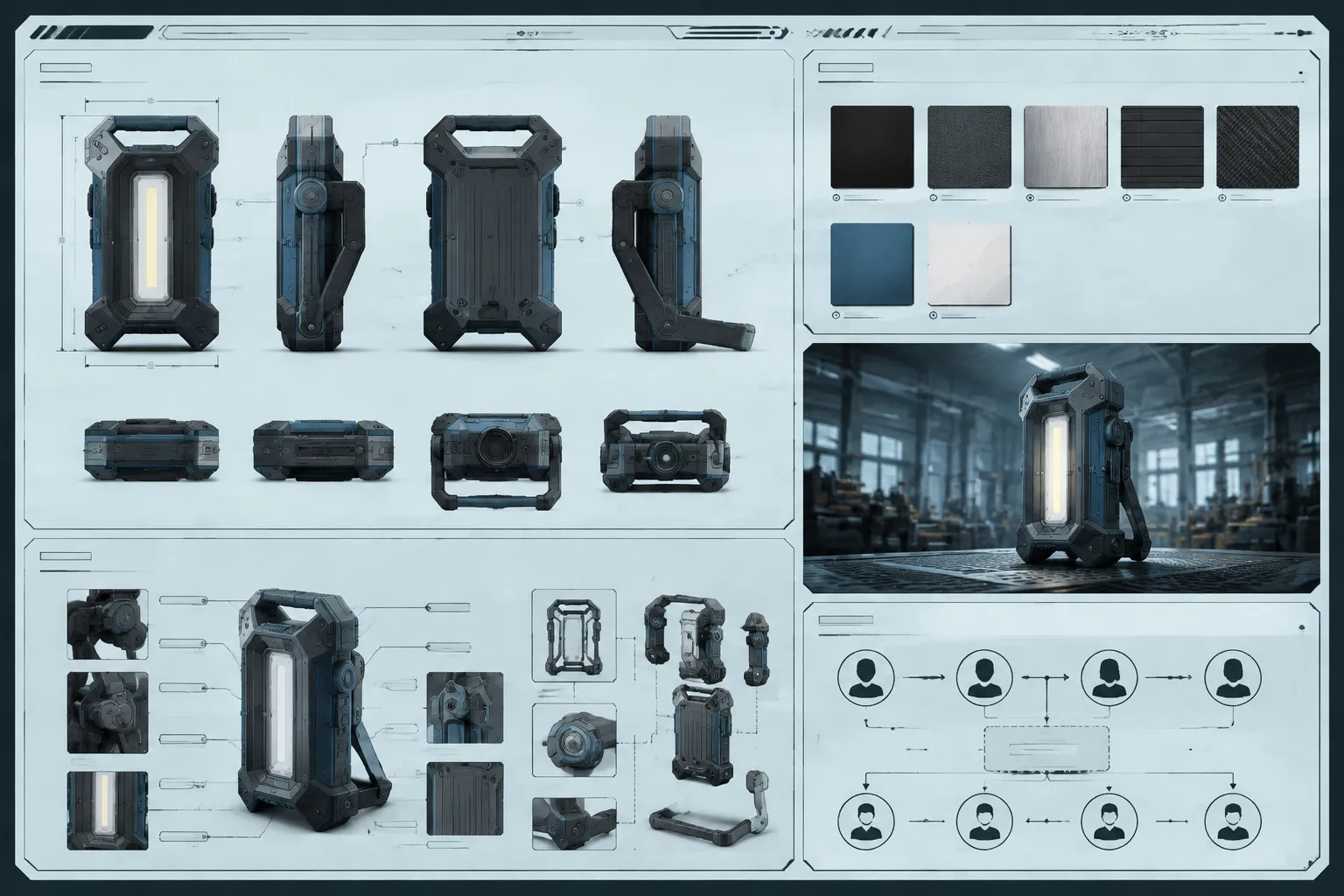
- Freeze the review condition. Record the image version, viewing angle, crop, context, and comparison set.
- Mark visible observations. Annotate silhouette, massing, edge breaks, transitions, controls, openings, finishes, and scale cues.
- Write the inferred decision. State what the feature appears to communicate.
- Name the unresolved assumption. Write the current presumption in a form that can change.
- Estimate the consequence. Identify the direction, criterion, or handoff record that may need revision.
- Compare an alternative or reference. Test the interpretation with another view, concept, material reference, context mockup, or documented requirement.
- Record the rationale. State why the direction was selected and what remains open.
- Assign the next review. Name the next stage or owner without implying that the render has passed that review.
- Update status after new evidence. Change confidence and status while preserving the decision history.
Common Review Confusions
“The render shows it, so it is decided.”
The image may represent a selected direction, an illustrative detail, or a placeholder. Check the register and source record before treating it as settled.
“The concept looks realistic, so the proportions are correct.”
Lighting and surface detail improve communication but do not confirm dimensions or physical relationships. Compare silhouette, scale cues, and documented dimensional information separately.
“This assumption is the requirement.”
A requirement comes from the relevant project record. An assumption is the current belief used while information is incomplete. Keep both visible when they influence the same feature.
“An open assumption is automatically a risk.”
An open assumption may have low or high consequence. Prioritize it according to what changes if it proves wrong.
“A comparison proves which concept is best.”
A comparison exposes differences and supports a decision. It does not establish universal correctness, technical feasibility, or market acceptance.
“A source image can be reused because it appears in the board.”
Appearance in a reference board does not establish reuse permission. Keep source context and rights records separate from visual interpretation.
What to Carry Into the Next Stage
Carry forward more than the preferred render:
- The selected concept direction and exact image or view used for review.
- The visible observations and inferred decisions attached to them.
- The unresolved design assumptions and their confidence and status.
- The comparison directions that were rejected or retained.
- The rationale for the current selection.
- The evidence still required and the next review stage or owner.
- Source and rights records connected to the visual assets.
This record lets a later reviewer distinguish a deliberate visual choice from an unresolved placeholder. It also reduces the chance that presentation detail will be mistaken for technical information.
Short Assumption Register Template
| Field | Entry |
|---|---|
| Review item | Feature or decision under review. |
| Concept or image version | Stable reference for the reviewed visual condition. |
| Visible cue | Pointable observation in the image. |
| Inferred decision | Meaning the cue appears to communicate. |
| Unresolved assumption | Current belief that may change. |
| Requirement or constraint | Relevant documented condition, if one exists. |
| Potential consequence | Decision or view that may need reopening. |
| Alternative or reference | Comparison needed to test the interpretation. |
| Evidence still needed | Source, review, sample, study, or test. |
| Rationale and next review | Why the direction was selected and where the question moves next. |
| Owner and status | Responsible workstream and current record state. |
Final Review Question
Before moving a concept render forward, ask which statements are observations, which are design assumptions, and which require evidence outside the image. Then ask what changes if one assumption is revised.
A useful assumption register does not make a concept appear more certain. It makes uncertainty actionable. It shows why a direction was selected, how alternatives differ, which visual cues carry the most interpretation, and where the next review begins.
Current research supports documenting assumptions, recording design rationale, distinguishing features from specifications and evidence, and revisiting decisions as information changes. It does not provide direct product-render evidence for every visual judgment here. Keep each conclusion tied to the visible concept, the documented record, or the next appropriate review.
Sources
- NASA Systems Engineering Handbook
- Framework for Innovation: Design Council's Double Diamond
- DESIGN RATIONALE IN CONCEPTUAL DESIGN: A LONGITUDINAL STUDY OF PROFESSIONAL DESIGN TEAMS’ PRACTICE
- Feature, specification and evidence framework for communicating design rationale
- Assumption management in model-based systems engineering: an aircraft design perspective
- The effect of sketch and render quality and design experience on concept evaluation in engineering design
- CONCEPT COMPARISON: A FUNCTION INTEGRITY INDICATOR